
Mulitalo preparing for emotional homecoming with Kiwis
All the NEWS. All the VIEWS.
All the ACTION.
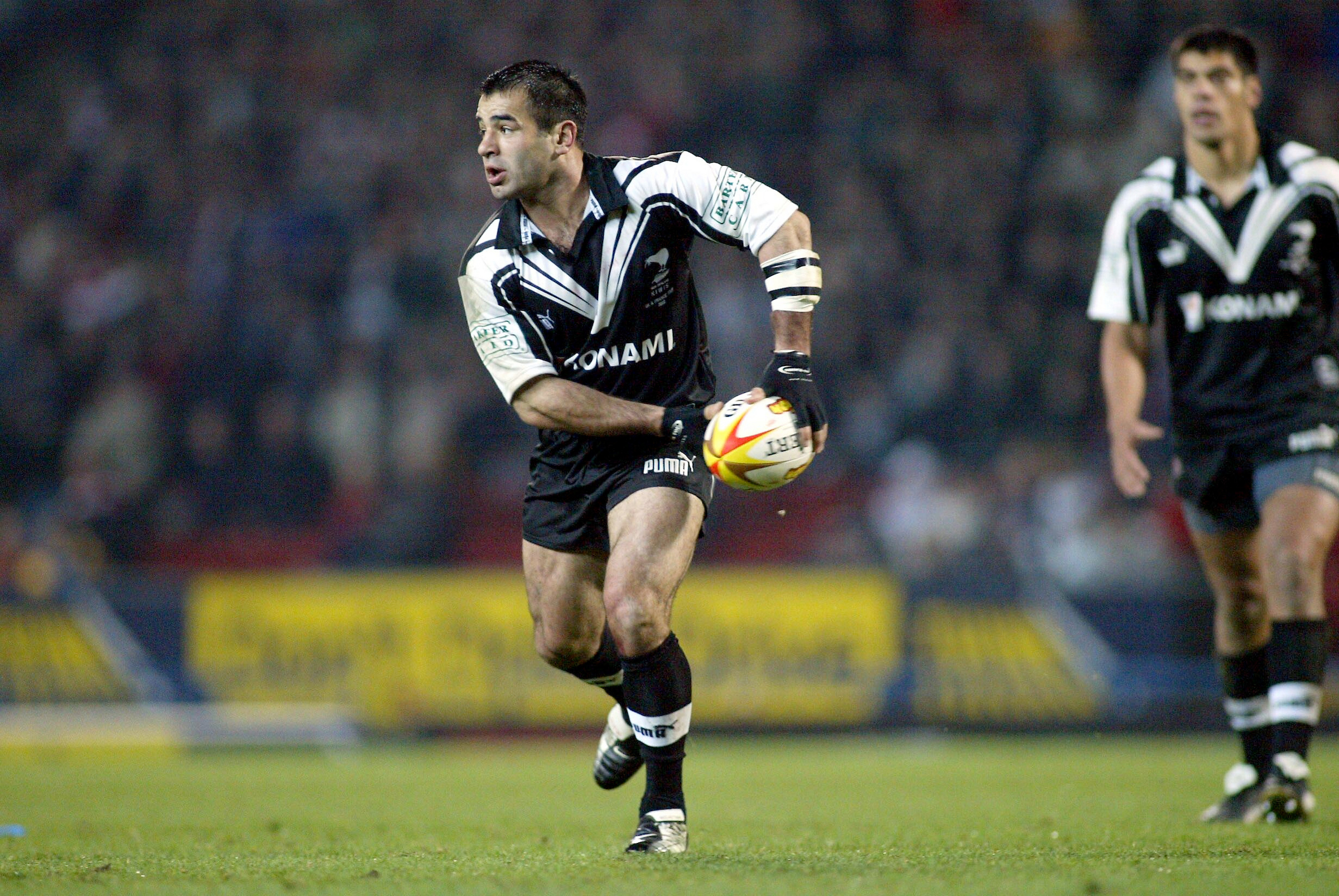
IRL Hall of Legends: inaugural inductees announced
More than 40 of the greatest players from international rugby league's beginnings to current superstar Jason Taumalolo have been selected as inaugural inductees into the IRL Hall of Legends.
The Inductees comprise of 10 players from pre-1954, six greats of the women's game and 26 male players from the post-1954 era - including Taumalolo, whose decision to represent Tonga at the 2017 World Cup changed international rugby league forever.
A total of eight nations are represented - Australia, England, New Zealand, France, Wales, Fiji, Samoa and Tonga.
Inductees will be celebrated, and those who are able to attend presented with their awards, at a ceremony at Suncorp Stadium on Thursday ahead of this weekend's IRL Rugby League World Cup 2026 finals.
Taumalolo is the only current player inducted but the Inductees also include Ali Brigginshaw, who retired at the end of the 2026 NRLW season after 29 appearances for Australia, including Player of the Match in the final of the two previous World Cups in 2017 and 2022.
Fellow Jillaroos greats Karyn Murphy and Tahnee Norris were also inducted, alongside Kiwi Ferns legends Honey Hireme-Smiler, Trish Hina and Luisa Avaiki, who also played for Samoa.
Kiwi greats Stacey Jones, who will coach New Zealand in Sunday's World Cup final, Ruben Wiki and Mark Graham have also been inducted.
Long serving Kangaroos captains Darren Lockyer, Brad Fittler and Cameron Smith head the list of Australian stars from the modern era, which includes Johnathan Thurston, Billy Slater and Petero Civoniceva - another Pacific pioneer who represented Fiji at the 2013 World Cup.
The list of Inductees includes Immortals Wally Lewis, Mal Meninga, Andrew Johns, Reg Gasnier, John Raper, Graeme Langlands, Bob Fulton, Arthur Beetson, Ron Coote and Clive Churchill.
Sir Billy Boston and Ellery Hanley head the list of British players, which includes Malcolm Reilly, legendary playmakers Alex Murphy, Neil Fox and Roger Millward, and Mick Sullivan - the only Englishman to have won two World Cups.
French greats Puig Aubert and Jean Galia – considered the founder of the game in France – also feature, alongside fellow pioneers such as Billy Batten, Harold Wagstaff and Dally Messenger.
Wales is also represented, with Jim Sullivan and Gus Risman having played for Wales, as well as Great Britain, while Boston was also Welsh.
IRL Chairman Troy Grant said: "The inaugural IRL Hall of Legends Inductees is a special group of players and a real who’s who of International Rugby League.
"This is long overdue recognition for these players whose contribution to international rugby league was not just confined to the playing field but transcended into the betterment of the game and into the lives and memories of rugby league fans worldwide.
"The list of nominees was exceptional and there will be further inductions to come into the IRL Hall of Legends. We simply couldn’t induct every deserving nominee at our first attempt; their recognition will come."
To be considered for induction into the IRL Hall of Legend candidates must have:
• Made a significant contribution to the international rugby league and/or
• Be a member of their nation's Hall of Fame or equivalent recognition, and/or
• Been awarded an IRL Golden Cap (50 Tests) and/or
• Won the IRL Golden Boot/RLIF International Player of the Year Award
More than 240 nominees were identified and the inaugural IRL Hall of Legends Inductees were chosen by a committee of esteemed Rugby League coaches, players, administrators, journalists and commentators from across the world.
The best Wheelchair Rugby League players will be considered for selection in the next induction during Rugby League World Cup 2030 as the IRL Hall of Legends acknowledges and recognises every discipline of the international game. This will enable the Wheelchair game to mature and grow the pool of candidates.
IRL Hall of Legends
Pre-1954
• CLIVE CHURCHILL (Australia) 37 Internationals 1948-1957
• DALLY MESSENGER (Australia/New Zealand) 12 Internationals 1907-1910
• PUIG AUBERT (France) 46 Internationals 1947-1956
• JIM SULLIVAN (Wales/Great Britain/Other Nationalities) 60 Internationals 1924-1933
• HAROLD WAGSTAFF (England/Great Britain) 21 Internationals 1911-1921
• DAVE BROWN (Australia) 9 Internationals 1933-1936
• GUS RISMAN (Wales/Great Britain) 36 Internationals 1932-1946
• FRANK BURGE (Australia) 13 Internationals 1914-1922
• WILLIAM ‘BILLY’ BATTEN (England/Great Britain) 25 Internationals 1907-1921
• JEAN GALIA (France) 4 Internationals 1934-1936
Women
• ALI BRIGGINSHAW (Australia) 29 Internationals 2009-2025
• KARYN MURPHY (Australia) 28 Internationals 1998-2013
• HONEY HIREME-SMILER (New Zealand) 32 Internationals 2003-2019
• LUISA AVAIKI (New Zealand/Samoa) 25 Internationals 1995-2008
• TAHNEE NORRIS (Australia) 33 Internationals 1998-2013
• TRISH HINA (New Zealand) 22 Internationals 1999-2010
Post-1954
• DARREN LOCKYER (Australia) 63 Internationals 1997-2011
• JOHN RAPER (Australia) 40 Internationals 1959-1968
• WALLY LEWIS (Australia) 34 Internationals 1981-1991
• REG GASNIER (Australia) 39 Internationals 1959-1968
• MAL MENINGA (Australia) 46 Internationals 1982-1994
• CAMERON SMITH (Australia) 56 Internationals 2006-2017
• ARTHUR BEETSON (Australia) 29 Internationals 1966-1977
• GRAEME LANGLANDS (Australia) 45 Internationals 1963-1975
• SIR BILLY BOSTON (Great Britain/Other Nationalities) 34 Internationals 1954-1963
• BOB FULTON (Australia) 37 Internationals 1968-1978
• ANDREW JOHNS (Australia) 26 Internationals 1995-2006
• ELLERY HANLEY (England/Great Britain) 38 TESTS 1984 – 1993
• MARK GRAHAM (New Zealand) 29 Internationals 1977-1988
• JOHNATHAN THURSTON (Australia) 38 Internationals 2006-2017
• RON COOTE (Australia) 24 Internationals 1967-1975
• RUBEN WIKI (New Zealand) 55 Internationals 1994-2006
• STACEY JONES (New Zealand) 46 Internationals 1995-2006
• BRAD FITTLER (Australia) 40 Internationals 1991-2001
• ALEX MURPHY (England/Great Britain) 29 Internationals 1958-1971
• MALCOLM REILLY (England/Great Britain) 12 Internationals 1970-1977
• ROGER MILLWARD (England/Great Britain) 47 Internationals 1966-1978
• NEIL FOX (England/Great Britain) 30 Internationals 1959-1969
• PETERO CIVONICEVA (Australia/Fiji) 51 Internationals 2001-2014
• MICK SULLIVAN (England/Great Britain) 51 Internationals 1954-1963
• BILLY SLATER (Australia) 30 Internationals 2008-2017
• JASON TAUMALOLO (Tonga/New Zealand) 34* Internationals 2014 -
As seen on intrl.sport
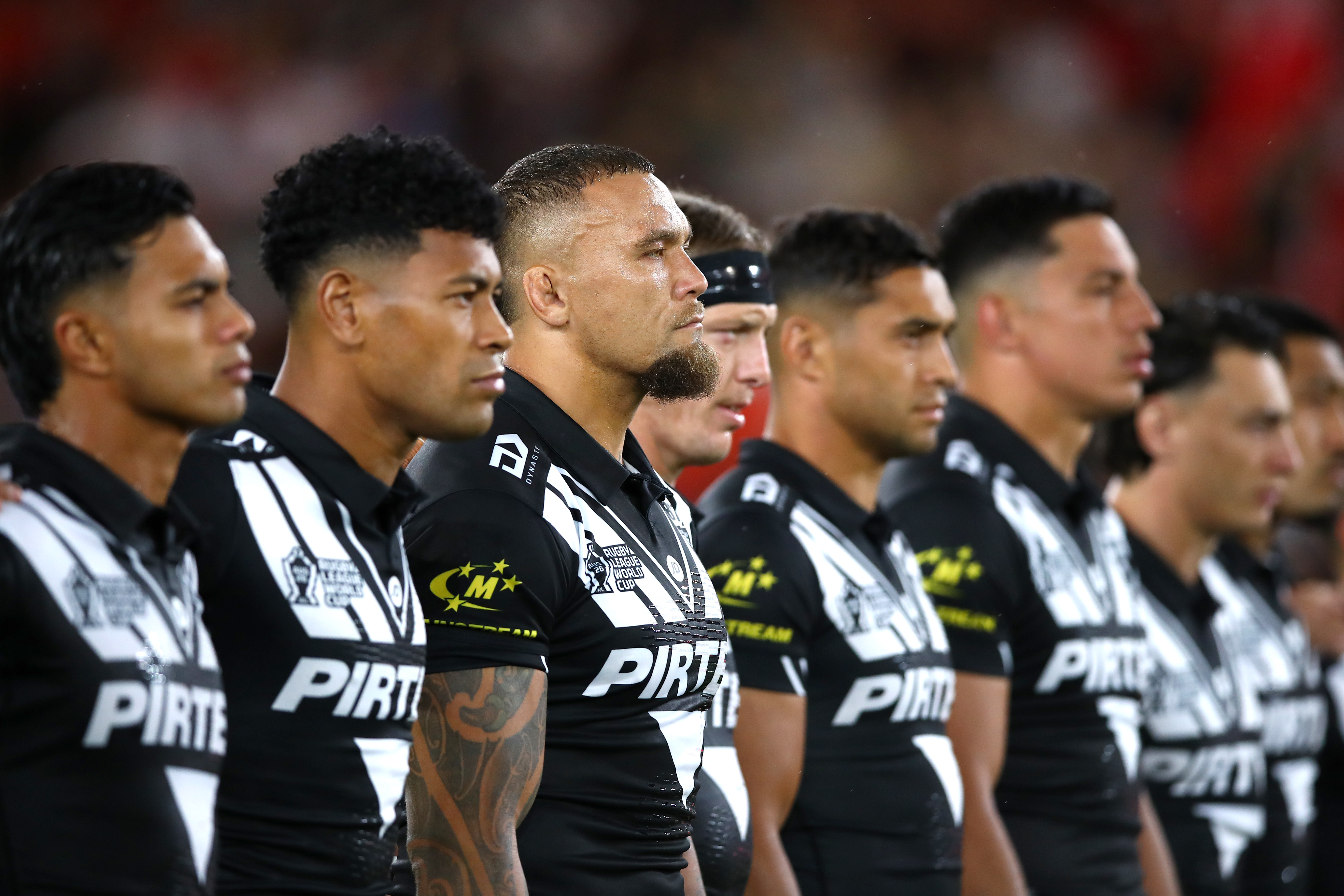
Mulitalo returns for World Cup final
Left winger Ronaldo Mulitalo returns in the only change to the New Zealand Kiwis’ starting lineup for Sunday’s Rugby League World Cup final against the Kangaroos at Suncorp Stadium in Brisbane (6.35pm local time, 9.35pm NZT).
The 26-year-old missed the Kiwis’ 34-10 semifinal win over Tonga last Saturday after accepting a one-match ban for a high tackle charge following the 78-0 victory over the Fiji Bati in Robina.
Boasting 10 tries in 12 Tests for the Kiwis, Mulitalo replaces Charnze Nicoll-Klokstad who filled in impressively against the Tongans scoring a try and making a game-high 216 metres.
He moves to the six-man bench which again includes utility Te Maire Martin, middle forwards Naufahu Whyte, Erin Clark and Xavier Willison plus fullback Keano Kini.
Loose forward Joseph Tapine, who debuted as Kiwi #800 in 2016, will make his 30th Test appearance in a familiar pack again including second rowers Isaiah Papali’i and Briton Nikora and props James Fisher-Harris and Moses Leota.
Winger Jamayne Isaako is on the cusp of claiming the New Zealand record for most Test points. His five goals against Tonga lifted his career points tally to 225 level with Shaun Johnson.
The Christchurch-born sharpshooter reached the target in just 18 Tests while Johnson played 35 internationals.
Isaako’s total has rocketed up during the World Cup with hauls of 10 points against Australia, a New Zealand record 38 against the Cook Islands, 26 against Fiji and 10 against Tonga for a tally of 84 points with a goalkicking success rate of just on 95 per cent. He has also twice kicked a New Zealand Test record 13 goals against the Cooks and Fiji topping the previous best of 12 set by Tasesa Lavea in 2000.
Centre Casey McLean (20) goes into the final with 16 tries in just eight Tests including eight in four games in the tournament so far.
In a competition which started in 1954, the Kiwis will be making their fifth appearance in the final; all five have been against the Kangaroos. Following losses at Eden Park in 1988 and Old Trafford in 2000, they stunned Australia 34-20 at Suncorp Stadium in 2008 and lost the 2013 decider at Old Trafford.
NEW ZEALAND KIWIS v AUSTRALIA
Suncorp Stadium, Brisbane
6.35pm, Sunday, November 15, 2026
1 Kalyn Ponga
2 Jamayne Isaako
3 Dane Gagai
4 Casey McLean
5 Ronaldo Mulitalo
6 Kodi Nikorima
7 Jahrome Hughes
8 James Fisher-Harris (c)
9 Jeremy Marshall-King
10 Moses Leota
11 Isaiah Papali’i
12 Briton Nikora
13 Joseph Tapine (v/c)
14 Te Maire Martin
15 Naufahu Whyte
16 Erin Clark
17 Xavier Willison
18 Keano Kini
19 Phoenix Crossland
20 Charnze Nicoll-Klokstad
21 Scott Sorensen
22 Leo Thompson
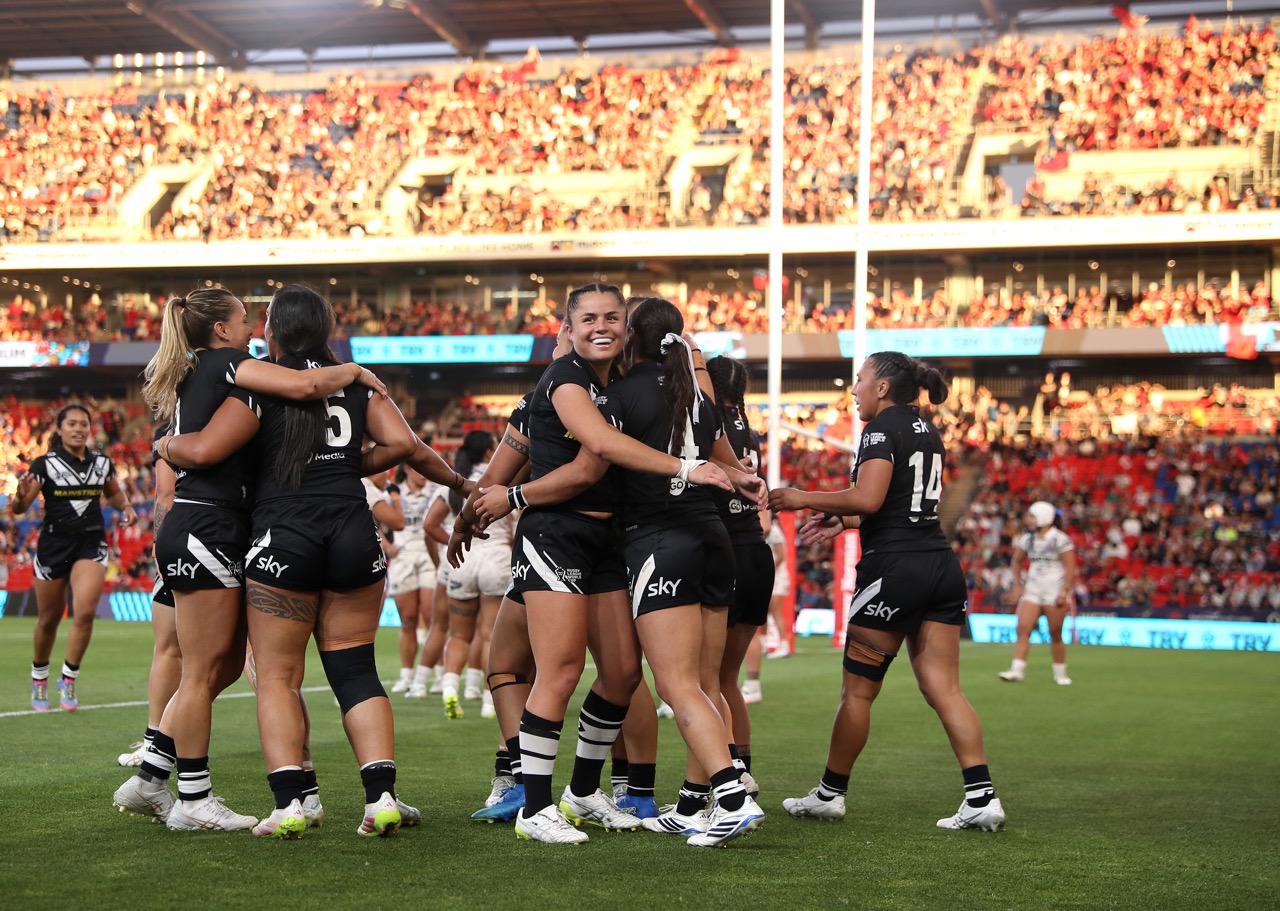
Kiwi Ferns squad named to hunt fourth World Cup title
An unchanged Kiwi Ferns squad will assemble on Sunday to battle the Jillaroos as both sides hunt their fourth Rugby League World Cup title.
The Kiwi Ferns have a longstanding legacy of success, being the only team to have appeared in every Rugby League World Cup Final. This weekend will mark the fifth consecutive final against trans-Tasman rivals Australia, who have held the top spot in recent years.
“Our Kiwi Ferns have been so dominant in years gone by, and we want to bring dominance back to this jersey, so I think it will be a case of who wants it more,” said Co-Captain Georgia Hale of the impending clash.
The last time the Kiwi Ferns lifted the trophy was interestingly also at Suncorp Stadium, in a thrilling 34-0 win over Australia in 2008, which marked their third World Cup title on the trot.
Kiwi Ferns Head Coach Ricky Henry believes his group has what it takes to win.
“We have been building well throughout the tournament; we understand the Jillaroos side, and will give it our all to make New Zealand proud this weekend,” said Henry.
The Kiwi Ferns will kick off at Suncorp Stadium at 3.10pm AEST / 6.10pm NZDT this Sunday ahead of the Kiwis v Australia Men’s Final.
Kiwi Ferns Squad To Face Australia
- Apii Nicholls
- Leianne Tufuga
- Mele Hufanga
- Stacey Waaka
- Mackenzie Wiki
- Chantay Kiria-Ratu
- Raecene McGregor
- Alexis Tauaneai
- Georgia Hale
- Otesa Pule
- Shaniece Monschau
- Kaiyah Atai
- Angelina Teakaraanga-Katoa
Interchange:
- Ashleigh Quinlan
- Annessa Biddle
- Shannon Mato
- Ivana Lauitiiti
Reserves:
- Brooke Anderson
- Zahara Temara
- Brianna Clark
- Abigail Roache
- Tenika Willison
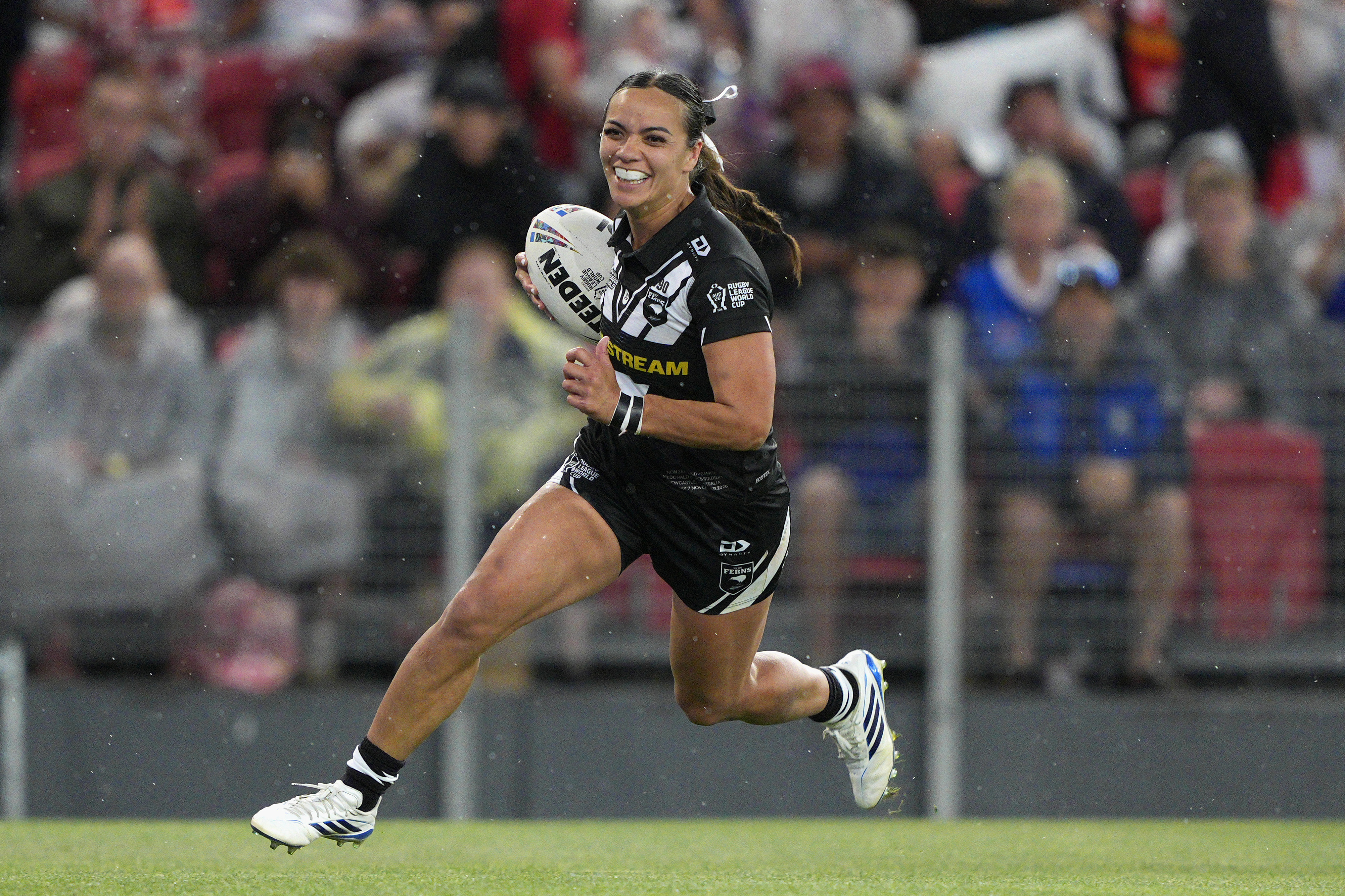
Kalyn Ponga & Stacey Waaka claim 2026 IRL Golden Boot awards
Kiwis fullback Kalyn Ponga and Kiwi Ferns outside back Stacey Waaka have been recognised as the best in the international game for 2026, taking out the men’s and women’s International Rugby League Golden Boot awards.
The pair become the first New Zealand winners since 2023 when both team captains James Fisher-Harris and Georgia Hale claimed the honours, following the Kiwis winning the inaugural Pacific Championships and the Kiwi Ferns' drought-breaking victory over the Australian Jillaroos.
While both in their maiden campaigns in the black and white jerseys, Ponga and Waaka have played instrumental roles in their teams' World Cup campaigns, which will culminate in this Sunday's Grand Final against Australia at Brisbane's Suncorp Stadium.
Waaka has featured in all Kiwi Ferns matches this campaign, lining up on the wing and in the centres. Across four matches she has scored nine tries, including hat-tricks against France and Samoa, and contributed four total try assists. Standout performances in her debut against Fiji and again in the semi-final victory over Fetu Samoa saw her claim Player of the Match honours twice.
Her impact has helped the Kiwi Ferns go unbeaten throughout the tournament and secure their seventh consecutive Grand Final appearance, as they look to reclaim the trophy they last lifted in 2008.
Ponga made an immediate impact on debut in the opener against Australia, scoring a double, producing two line breaks and running for 254 metres. A broken arm forced him from the field early and required immediate surgery, seeing him miss the Kiwis’ remaining pool matches against the Cook Islands and Fiji.
Just three weeks post-surgery he made a stunning return in the semi-final against Tonga, playing a pivotal role in steering the Kiwis to victory and their first Grand Final appearance since 2013. He recorded three try assists, ran for 198 metres and produced several try-saving tackles in an impressive comeback performance, earning him Player of the Match.
They join the list of fellow New Zealanders to have won the award since 2000, alongside Stacey Jones, Benji Marshall, Shaun Johnson, Roger Tuivasa-Sheck, Joseph Manu, and Raecene McGregor.
Eight Kiwis & Kiwi Ferns inducted into International Rugby League Hall of Legends
Eight New Zealand representatives have been included among the inaugural International Rugby League Hall of Legends inductees.
A worldwide voting panel of rugby league historians, journalists, commentators, coaches and players were handed the gruelling task of weighing up the credentials of hundreds of contenders from 119 years of international competition.
Ten men’s players from the pre-1954 era (prior to the first World Cup), 25 men’s players from 1954 onwards and six women’s players were selected by the panel. Players’ contribution to, and impact on, international rugby league was the sole consideration.
Pioneering All Golds and Australian superstar Dally Messenger was a clear-cut choice in the pre-1954 group; Kiwis legends Mark Graham, Stacey Jones ONZM and Ruben Wiki ONZM, and Tonga and New Zealand rep Jason Taumalolo were voted into the post-1954 men’s contingent; while Kiwi Ferns icons Honey Hireme-Smiler ONZM, Luisa Avaiki ONZM and Trish Hina make up half of the foundational women’s inductees.
Mark Graham’s status as New Zealand’s Player of the Century – announced in 2007 – is perhaps the best illustration of his standing in the pantheon of rugby league history. The Ōtāhuhu product played 29 Tests in the Kiwis’ back-row from 1977-85, including a then-record 18 as captain.
First skippering his country in 1982, the dynamic North Sydney Bears star was at the peak of his powers during the Kiwis’ watershed 1985 season, which featured an unforgettable 18-0 win over Australia at Carlaw Park and a drawn series in Great Britain that highlighted his extraordinary toughness.
Graham captained Rest of the World combinations against Australia and Great Britain in 1988, before signing off from international football in the loss to the green-and-golds in the World Cup final later that season. He was named as one of the inaugural NZRL Legends of League in 1995, inducted into the New Zealand Sports Hall of Fame the following year and became the first New Zealander to be welcomed into the NRL Hall of Fame in 2018.
Longtime Test teammates Ruben Wiki and Stacey Jones were both named in the Kiwis’ Team of the Century in 2007, inducted into the NRL Hall of Fame in 2019 and became members of the NZRL Legends of League in 2022. The pair are also among a select group of rugby league players in the New Zealand Sports Hall of Fame.
Ōtāhuhu junior Wiki’s then-world record 55-Test tenure in the black and white jersey can be split into two distinct parts: as a devastating centre from 1994-99 and as a forward pack leader and enforcer from 2000-06. The Canberra Raiders and Warriors great captained New Zealand in 18 Tests, including a one-off victory over Australia in 2003 and the Kiwis’ groundbreaking 2005 Tri Nations triumph.
Jones, ‘The Little General’, stands tall as New Zealand’s greatest-ever halfback and arguably the nation’s most decorated rugby league player of all time.
Debuting as a 19-year-old at the 1995 World Cup, the Point Chevalier junior played the first 19 of his 46 Tests for the Kiwis in succession. Jones was the linchpin of wins over Australia in three successive years in the late-1990s, a series win in Britain in 1998 and the team that powered into the 2000 World Cup final.
Perhaps Jones’ finest hour at international level was guiding New Zealand to the 2005 Tri Nations title, playing an instrumental and inspirational role in the 24-0 shutout of Australia in the Leeds-hosted final – just days after returning from Auckland following the birth of his third child.
Warriors stalwart Jones scored 16 tries and 160 points at Test level and captained the Kiwis seven times. He was named New Zealand Rugby League Player of the Year twice, while in 2002 he became just the second New Zealander to win the coveted Golden Boot award as the world’s best player.
Wiki and Jones both retired from international football after the Kiwis’ gallant golden point loss to the Kangaroos in the 2006 Tri Nations final.
A catalyst for the surge in Pacific nations’ strength in the international arena, Auckland-born Jason Taumalolo first represented Tonga in 2013 as a 19-year-old, before playing 10 Tests for New Zealand from 2014 (including that year’s Four Nations final victory over Australia) to 2017.
The rampaging North Queensland Cowboys forward’s decision to align with Tonga ahead of the 2017 World Cup helped kickstart an international rugby league revolution, spearheading a historic run to the semifinals. Taumalolo captained Tonga at the next World Cup in 2022 and made his 22nd appearance for Tonga in Saturday’s semifinal against the Kiwis.
Rugby union drawcard Herbert Henry 'Dally' Messenger's decision to switch to the ‘professional’ code in 1907 is regarded as one of the most important factors in getting rugby league off the ground in Australia. The New Zealand 1907-08 ‘All Golds’ tour – which stopped for exhibition games in Sydney before setting sail for a lengthy stay in Britain – was also hugely influential, and Messenger was integral to that trip’s success as a guest player.
The backline wizard played 32 games and was the All Golds’ leading pointscorer, while he played in four of New Zealand’s five Tests on tour. Upon the team’s return home, Messenger played for Australia against New Zealand in the historic 1908 series. He went back to Britain at the end of the year on the inaugural Kangaroo Tour, captaining Australia against Northern Union in that series and at home in 1910.
Messenger was named in Australia’s Team of the Century in 2008 and was one of the first batch of pre-WWII players inducted as an NRL Immortal in 2018 – but he also retains a treasured place in New Zealand rugby league’s early narrative.
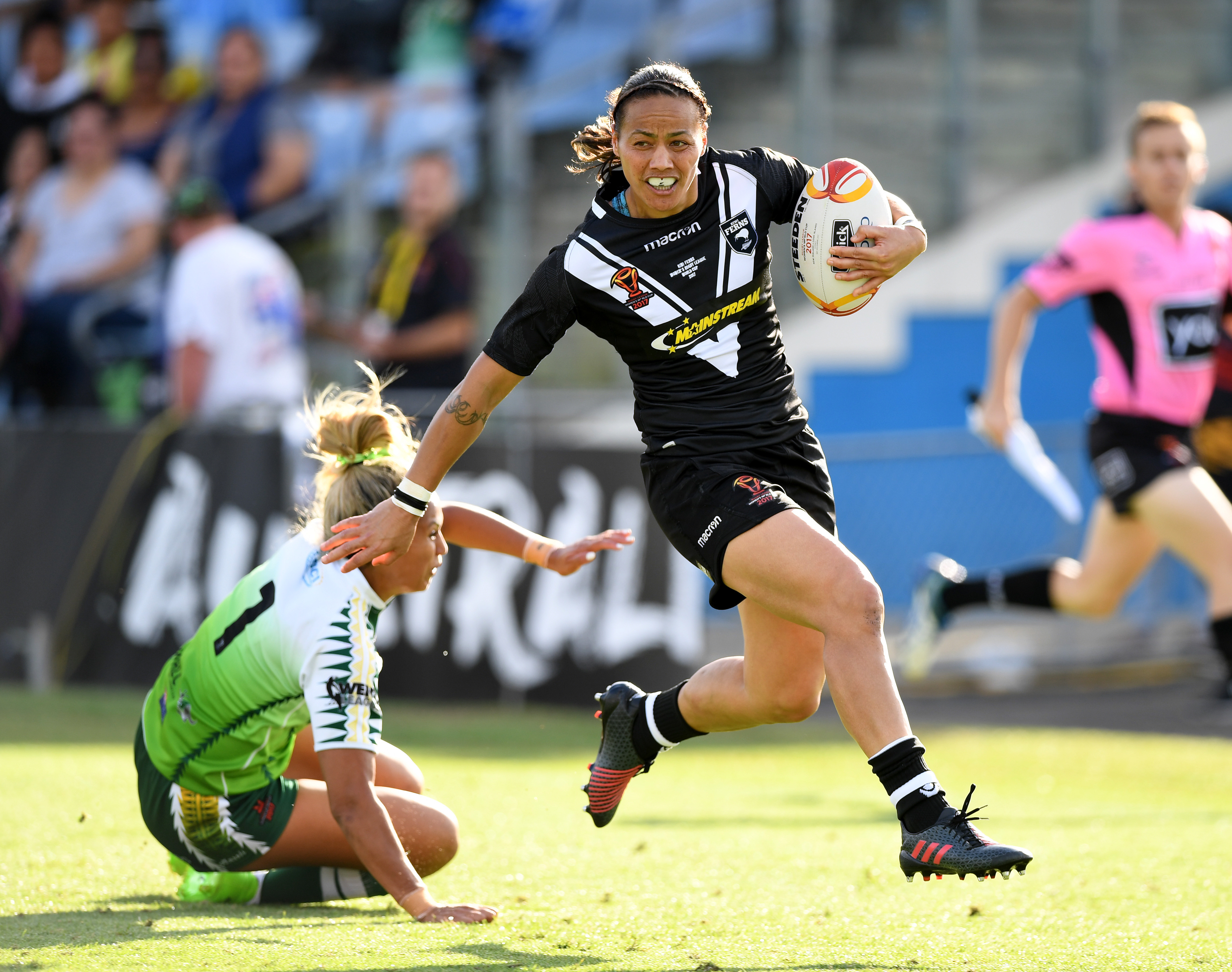
Honey Hireme-Smiler is a contender for the mantle of the greatest women’s rugby league player of all time. Her tenure in the Kiwi Ferns jersey – which includes four World Cups – spanned 19 seasons (2002-20).
The blockbusting Waikato-born centre/winger scored 10 tries at the 2003 World Cup and another seven in the 2008 edition. Despite the Kiwi Ferns’ reign as world champions coming to an end at the 2013 World Cup under her captaincy, Hireme-Smiler was named Player of the Tournament after crossing for seven tries.
Also a Black Ferns star, Hireme-Smiler was virtually unstoppable at times – she scored a record 13 tries at the 2017 World Cup as a 36-year-old and captained the Kiwi Ferns to World Cup Nines victory in 2019. She was named in NRL.com’s Women’s Rugby League Team of the Decade (2010s).
Luisa Avaiki was one of just three players to feature in New Zealand’s first three World Cup triumphs and the only 1995 original still playing when the Kiwi Ferns carried off the 2008 title, reflecting her rare longevity in the front-row trenches. Meanwhile, the Auckland stalwart’s role as captain of the 2003 and 2008 World Cup successes underline her status as one of women’s rugby league’s finest leaders and a Kiwi Ferns icon.
Avaiki’s explosive ball-running was a key component of New Zealand’s resounding victory in the first women’s Rugby League World Cup in England in 2000. She ascended to the captaincy for the 2003 competition on home soil and was named Player of the Tournament as the Kiwi Ferns defended their title in emphatic style. Avaiki’s tenure in the New Zealand team concluded as she led another World Cup success in 2008, while she later skippered Fetu Samoa in a historic Test against Australia in 2011.
Trish Hina has been described as one of New Zealand’s greatest sportswomen, representing her country in rugby league, rugby union, touch football and softball. But the Wellington five-eighth undoubtedly made her biggest impact in the 13-a-side game – and arguably holds the status of women’s rugby league’s first genuine superstar.
A record-setting tryscorer and pointscorer, the phenomenally gifted Hina’s Kiwi Ferns tenure spanned 14 years (1997-2010) and her linchpin role as New Zealand won the first three World Cup included Player of the Tournament nods in 2000 and 2008.
Avaiki and Hina were among the four inaugural Kiwi Ferns inducted into the NZRL Legends of League in 2022. Hireme-Smiler has not yet been eligible for a place in the Legends of League (due to the five-year retirement standdown period requirement) but is a near-certainty for that honour when she qualifies.
Hughes, Ponga steer Kiwis into first World Cup final since 2013
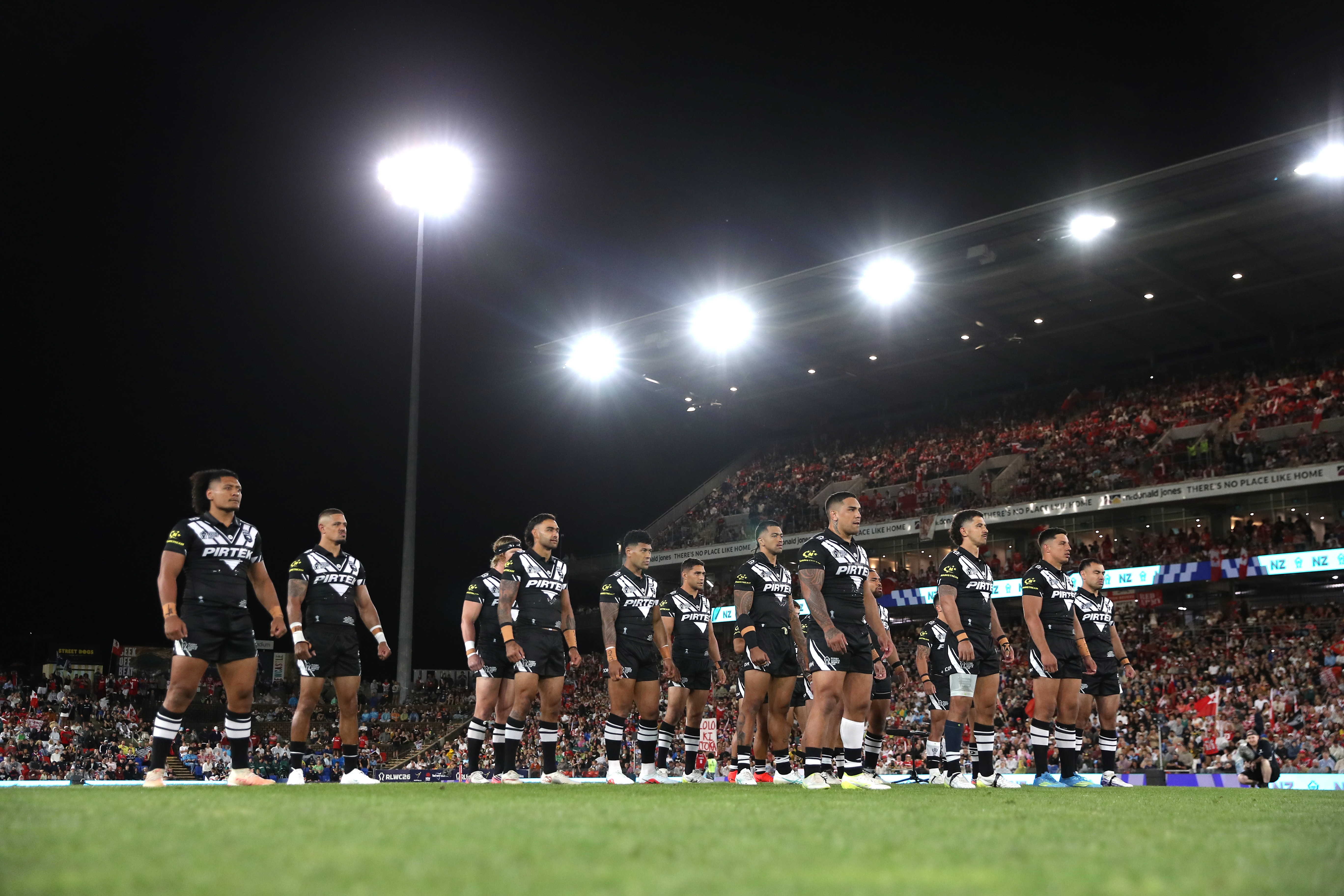
New Zealand has marched into the World Cup final on the back of a clinical second-half performance to beat Tonga 34-10 in difficult conditions in Newcastle on Saturday night.
The Kiwis fought back from a 10-6 deficit late in the first half and put it together when it mattered, while riding the advantage of wind gusts upwards of 60km/h.
Kalyn Ponga showed no hesitation in his return from a broken arm and it paid immediate dividends, the fullback attacking both sides of the ruck in New Zealand’s first set before setting up Briton Nikora for the opening try on a short side play.
The two teams settled into an arm wrestle and it was the Kiwis winning the middle of the ruck, but Isaiya Katoa’s kicking game with the breeze behind him kept Tonga in the fight.
Tonga eventually earned a chance to camp on the New Zealand line but they struggled to find a way through from close quarters and lacked polish on last play.
Fittingly, it was a stunning long-range try that eventually got Tonga their first points.
After a last-tackle bomb from Jahrome Hughes was allowed to bounce, Jojo Fifita took the ball and swerved through a broken defensive line before finding Tui Lolohea alongside him.
The ball moved out to speedster Tolu Koula, who powered past the cover defence, allowing him to draw and pass to Fifita to finish the movement under the sticks.
Demitric Vaimauga had visions of adding to the lead soon after when he picked up a loose ball, floated across field and showed it inside and outside before slicing through, only for Ponga to stop him metres short of the line with a superb one-on-one tackle.
It didn’t hold Tonga off for long as they received a scrum after the following play, then shifted to their left off the back of it to put Fifita in for his second to give his side a 10-6 lead after 32 minutes.
But it was New Zealand going to half-time with a 12-10 lead after a late try to Dane Gagai when Lehi Hopoate failed to clean up a Hughes grubber under pressure from chaser Ponga.
The second half started at a frantic pace to match the gale that had whipped up behind the Kiwis, with Tonga making multiple breaks through the middle and New Zealand returning in an end-to-end opening.
The blustery conditions were causing all sorts of problems for Tonga, completely nullifying Katoa on last tackle and causing several kicks to fly over Tonga fullback Hopoate’s head, gifting the Kiwis ideal field position.
Casey McLean ultimately put another exclamation mark on his stunning World Cup campaign with a piece of individual brilliance to extend New Zealand’s lead in the 48th minute and Hughes added his name to the scoresheet five minutes later with his own dummy and run and suddenly the score had blown out to 24-10.
The Kiwis’ World Cup final berth was all but sealed when Xavier Willison crashed over in the 70th minute before Charnze Nicoll-Klokstad downed an Erin Clark cross-field chip on the buzzer.
New Zealand's only injury concern going into the final will be an ankle issue for prop Naufahu Whyte, who left the contest early in the second half and did not return.
As seen on nrl.com
Dominant win qualifies Kiwi Ferns for Final
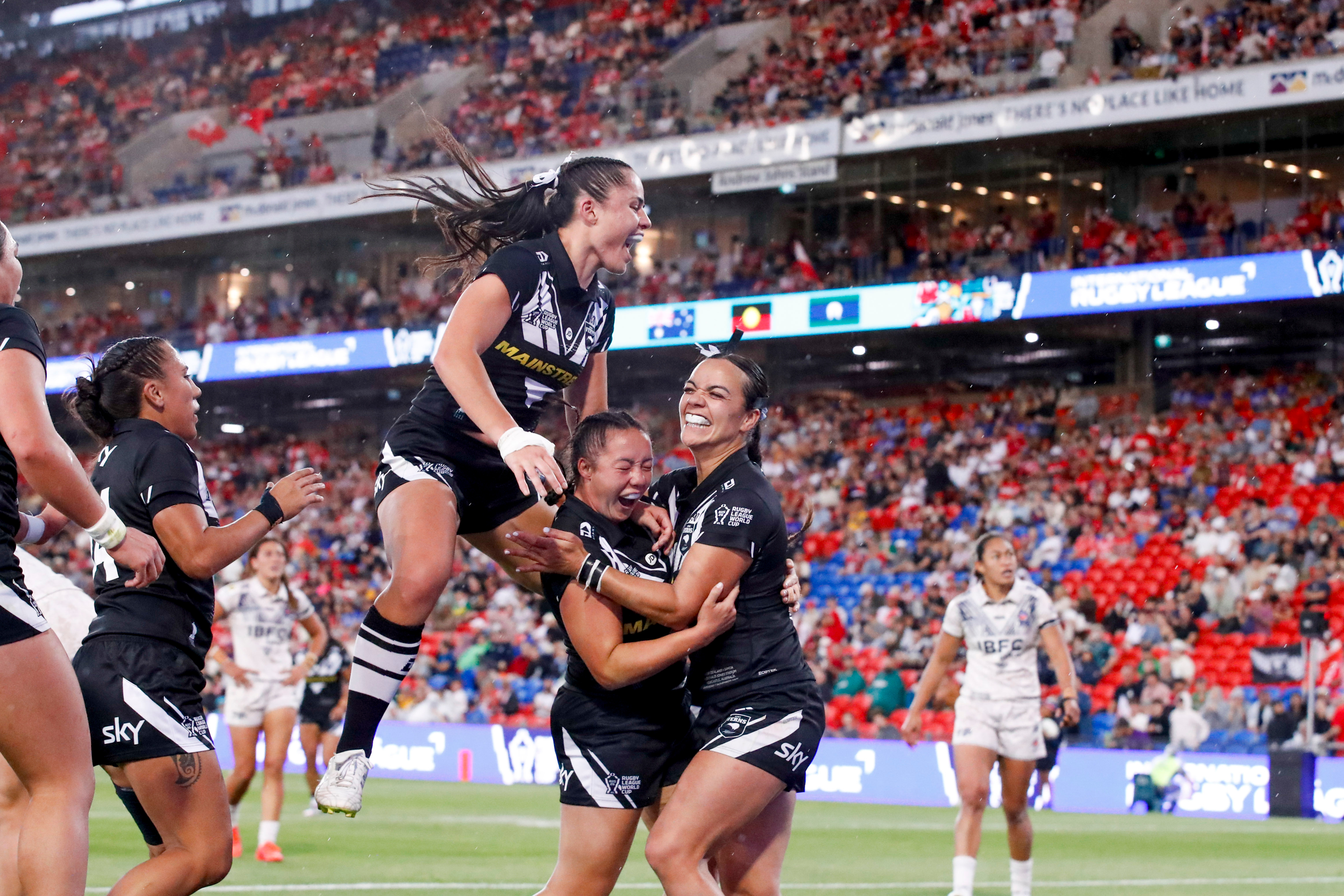
The Kiwi Ferns put on a dominant display in Newcastle, shutting out Fetu Samoa whilst they slotted seven thrilling tries.
Canberra Raiders Mackenzie Wiki opened the scoring early, dotting down in the corner, whilst Stacey Waaka notched another off a chip through from Co-Captain Raecene McGregor. The duo successfully ran the same play again in the second half for another four points.
Kiwi Ferns Head Coach Rick Henry said: “That was a really good Samoan team that played tonight; I thought they were great during the World Cup and deserve credit.
“As the game got on, I felt that we got better and better. We found our rhythm and our groove and were able to score some really good tries towards the back of that second half.”
In the second 35, Warriors representatives Mele Hufanga, Kaiyah Atai and Waaka each crossed the chalk. McGregor then dove under the posts for another try, which Chantay Kiria-Ratu successfully converted to bring the final score to 32-0.
Influential centre Stacey Waaka earned Player of the Match with her second hat-trick performance of the Rugby League World Cup.
“Whenever the ball goes near her, you know you’ve got a chance of something,” said Henry of the rugby union convert.
The Kiwi Ferns now progress to the Rugby League World Cup Final in Brisbane on Sunday 15 November.
Tries: STACEY WAAKA 3 (25', 44', 64'), RAECENE MCGREGOR (67'), KAIYAH ATAI (60'), MELE HUFANGA (58'), MACKENZIE WIKI (2')
Conversions: CHANTAY KIRIA-RATU 2/7 (29%)
Ponga to start semifinal against Tonga
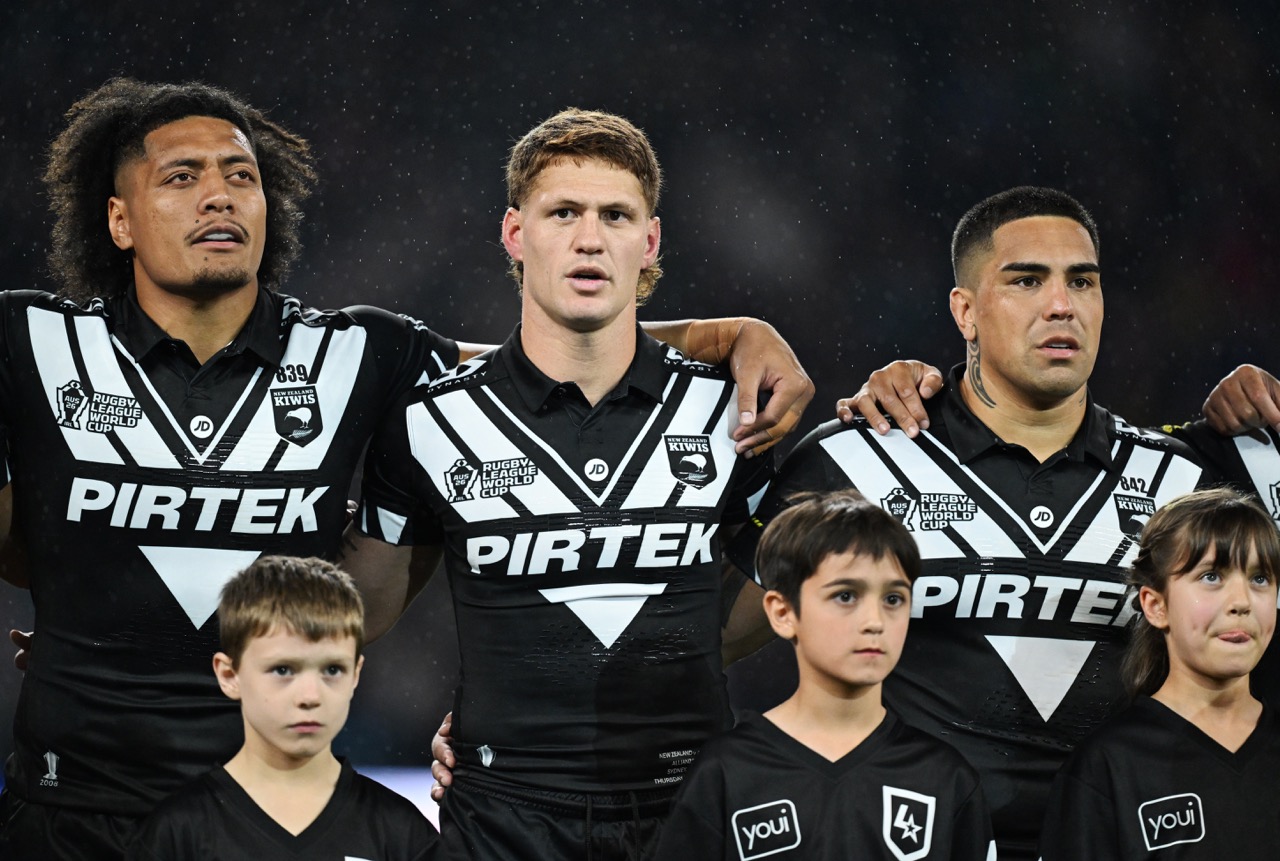
Fullback Kalyn Ponga will start for the New Zealand Kiwis in tonight’s Rugby League World Cup semifinal against Tonga at McDonald Jones Stadium in Newcastle (8.05pm kick-off local time; 10.05pm NZT).
After being included in jersey #21 in the 22-man squad named on Tuesday, he moved onto the six-man bench in the updated side released at the 24-hour deadline last night.
Now, 90 minutes out from kick-off, he is confirmed at fullback as he returns from breaking his left arm in his Test debut against the Kangaroos in Sydney on October 15.
His inclusion results in Keano Kini, who started at fullback in the wins over the Cook Islands and Fiji, moving to the six-man bench. Also joining the extended bench is hooker Phoenix Crossland in jersey #22.
The three players omitted from the 22-man squad are Scott Sorensen, Leo Thompson and Tanner Stowers-Smith.
In a forced change to the starting lineup, utility Charnze Nicoll-Klokstad was named on the left wing to replace the suspended Ronaldo Mulitalo.
Other than Ponga and Nicoll-Klokstad, the rest of the side is unchanged from the one used in last Saturday’s 78-0 victory over the Fiji Bati in Robina, a record winning margin for the Kiwis topping the 74-0 win over Tonga at Carlaw Park in 1999 and the 84-10 trouncing of the Cook Islands in Reading at the 2000 Rugby League World Cup.
The Kiwis face a Tonga side which comes into the match with three straight wins over England 30-12, Lebanon 36-0 and Toa Samoa 20-18.
After being edged out 24-22 by the Kangaroos at Allianz Stadium in the opening match of the tournament, the Kiwis have scored at a point a minute in racking up 160 points against the Cook Islands (82-16) and Fiji (78-0).
Leading the way in the points-scoring stakes have been centre Casey McLean and winger Jamayne Isaako.
McLean has seven tries in the three games played, including four against Fiji. Scoring in every Test he has played since his debut in 2024, the 20-year-old already has a total of 15 tries in just seven internationals, only seven short of Manu Vatuvei’s New Zealand record of 22.
High-scoring Issako is closing in on Shaun Johnson’s all-time points-scoring mark of 225 in Tests.
He claimed the record for most goals in a Test for the Kiwis with 13 against the Cook Islands and then repeated it against Fiji to take his career tally for New Zealand to 215. In this World Cup alone, he has 74 points in three games, including 31 goals from 32 attempts.
NEW ZEALAND KIWIS v TONGA
McDonald Jones Stadium, Newcastle
8.05pm, Saturday, November 7, 2026
1 Keano Kini
2 Jamayne Isaako
3 Dane Gagai
4 Casey McLean
5 Charnze Nicoll-Klokstad
6 Kodi Nikorima
7 Jahrome Hughes
8 James Fisher-Harris (c)
9 Jeremy Marshall-King
10 Moses Leota
11 Isaiah Papali’i
12 Briton Nikora
13 Joseph Tapine (v/c)
14 Te Maire Martin
15 Naufahu Whyte
16 Erin Clark
17 Xavier Willison
18 Scott Sorensen
19 Leo Thompson
20 Tanner Stowers-Smith
21 Kalyn Ponga
22 Phoenix Crossland

Whyte looks to put cherry on top of a very sweet season
With a premiership ring and Dally M Prop of the Year gong already on his CV, powerhouse Kiwi Naufahu Whyte is daring to dream of adding a World Cup title to his haul.
And the 24-year-old, who racked up 208 run metres off the bench against Fiji on Saturday, has even joked about retiring if New Zealand can claim another World Cup to go with their 2008 success.
“Lifting that final trophy would just be the cherry on top for me," Whyte told NRL.com.
“I've joked around about it [retirement], being like, 'Oh, yeah, I think that's me after this and just retire at 24 but nah... international you know, it's the best of the best and there's no easy games.
“There’s no easy way out, coming with next two games and we honestly just got to get back to the drawing board, work on the things that we know we can improve on and just go after it."
When it comes to 'going after it', few have done it better in 2026, with Whyte dominating through the middle in the Roosters' grand final win over Newcastle and backing that up on the world stage in recent weeks.
And he gives plenty of the credit for his blistering form to his fellow Kiwi big men, who have laid a foundation for Casey McLean, Keano Kini and Dane Gagai to run wild.
“I still pinch myself to this day, being in the same room alongside these guys," he said.
“There are a lot of boys that I looked up to coming throughout the grades and it just buzzes me out that I get to play alongside them.
“You know even though I’m a premiership winner, Dally M prop, all that kind of stuff, I always think like, 'nah, I'm not as good as I think I am'.
“I've only had a good couple of years these guys [James Fisher-Harris, Joseph Tapine, Moses Leota] have been having those kinds of years for many years now and consistently too.
“I ask them what it takes to be a top-tier prop and the things that I can work on to make my game better.
“There’s no better props and middle forwards to learn from, than the boys that's in this room.”
Whyte and his Kiwi teammates now turn their attention to a showdown with the powerhouse Tonga pack in Newcastle.
“You know at the end of the day our job as forwards, as middles, as props, we lay the platform, so it allows the edges and outside backs to do their thing," he said.
“We know that as middles if we can dominate and own that middle then we can win the game.
“It’s my job and it’s not really anything too difficult or hard. It's just own the middle, run hard, tackle hard."
As seen on nrl.com

Winging it: Wiki embracing her new role for the Ferns
Mackenzie Wiki has embraced a team first mentality in her first IRL World Cup with the Kiwi Ferns, saying she would even follow the footsteps of her father Ruben who transitioned from the backs to the front row.
“I've always made a joke that if you want me in the middle, I'll go in the middle,” Wiki said.
For now however, she looks right at home playing in the wing in a switch from her regular position of centre where she scored 10 tries in 13 appearances for the Raiders this season.
“It was a massive change from centre to wing, but I've always been told wherever you get put, to play your heart out,” Wiki told NRL.com.
“But I've found a little home at the winger spot and I'm I enjoying it.”
Ferns coach Ricky Henry praised his outside back's performance post his side's 40-12 win over PNG Orchids on Saturday night after she registered two tries and one try assist, having now scored four tries in two appearances.
“She’s been awesome,” Henry said.
“Turned up first week and unfortunately Shanice Parker got injured and she (Wiki) came in [to camp].
“She’s been asking a lot of questions, she’s built a bit of a combination with Stacey Waaka on that right edge and we’ve got something going there so really, really happy with that.
“She’s a quality player, she was unfortunate to miss our squad initially and she's come in and made every post a winner.
“So [if she] keeps playing like that and keeps scoring tries and making breaks and that sort of stuff, we’ll keep her in the team.”
Although it isn’t her first World Cup experience - having represented Cook Islands in 2021 - Wiki has still been turning to her club teammates in Zahara Temara and Leianne Tufuga for guidance.
“Those two I'm very close with back home in Canberra, so I lean on them quite a lot,” Wiki said.
“But the rest of the girls, they're all so good and I don't really have a group where I like go to more because everyone's all open arms, it's been such a great sisterhood.
“Last World Cup, four years ago, I was a full-on rookie to rugby league and it was a very different camp from this one.
“Obviously the Kiwi Ferns have been in it for a while, and I know Cook Islands have been there as well, but it’s (camp) still good, but different in their own ways.
“I love the culture of Cook Islands … I love representing my Cook Islands culture for my grandfather and for my mum.
“But it's also nice to represent New Zealand from where I grew up and where my parents both were born.”
The Ferns return to the World Cup semi finals on Saturday at McDonald Jones Stadium facing off against the flying Fetu Samoa side, a challenge that Wiki is ready to embrace.
“They're going to bring everything, they're such a great strong squad,” Wiki said.
“They’ve got a really good connection in their team and I know we do too [so] it's going to be a great battle out there.
“I know they're going to bring out their all, but I know that we are as well, but I think it's going to be a good match.”
As seen on nrl.com

Ponga, Crossland in Kiwis' extended squad
Hometown players Kalyn Ponga and Phoenix Crossland have been named in the New Zealand Kiwis’ extended squad for their Rugby League World Cup semifinal against Tonga at McDonald Jones Stadium in Newcastle on Saturday (8.05pm kick-off local time; 10.05pm NZT).
Fullback Ponga has been selected in jersey #21 as he bids to make his return to the side after breaking his left arm in his Test debut against the Kangaroos in Sydney on October 15.
Hooker Crossland is listed in jersey #22 after being called into the squad last night as a replacement for injured second rower Jacob Laban, who has been ruled out for the rest of the tournament.
In a forced change to the starting lineup, Kiwi head coach Stacey Jones has selected utility Charnze Nicoll-Klokstad on the left wing to replace the suspended Ronaldo Mulitalo.
The rest of the side named is unchanged from the one used in last Saturday’s 78-0 victory over the Fiji Bati in Robina, a record winning margin for the Kiwis topping the 74-0 win over Tonga at Carlaw Park in 1999 and the 84-10 trouncing of the Cook Islands in Reading at the 2000 Rugby League World Cup.
The Kiwis face a Tonga side which comes into the match with three straight wins over England 30-12, Lebanon 36-0 and Toa Samoa 20-18.
After being edged out 24-22 by the Kangaroos at Allianz Stadium in the opening match of the tournament, the Kiwis have scored at a point a minute in racking up 160 points against the Cook Islands (82-16) and Fiji (78-0).
Leading the way in the points-scoring stakes have been centre Casey McLean and winger Jamayne Isaako.
McLean has seven tries in the three games played, including four against Fiji. Scoring in every Test he has played since his debut in 2024, the 20-year-old already has a total of 15 tries in just seven internationals, only seven short of Manu Vatuvei’s New Zealand record of 22.
High-scoring Isaako is closing in on Shaun Johnson’s all-time points-scoring mark of 225 in Tests.
He claimed the record for most goals in a Test for the Kiwis with 13 against the Cook Islands and then repeated it against Fiji to take his career tally for New Zealand to 215. In this World Cup alone he has 74 points in three games including 31 goals from 32 attempts.
2026 RUGBY LEAGUE WORLD CUP SEMIFINAL
NEW ZEALAND KIWIS v TONGA
McDonald Jones Stadium, Newcastle
8.05pm, Saturday, November 7, 2026
1. Keano Kini | Kiwi #836
2. Jamayne Isaako | Kiwi #808
3. Dane Gagai | Kiwi #845
4. Casey McLean | Kiwi #841
5. Charnze Nicoll-Klokstad | Kiwi #820
6. Kodi Nikorima | Kiwi #793
7. Jahrome Hughes | Kiwi #819
8. James Fisher-Harris (c) | Kiwi #801
9. Jeremy Marshall-King | Kiwi #830
10. Moses Leota | Kiwi #827
11. Isaiah Papali’i | Kiwi #817
12. Briton Nikora | Kiwi #818
13. Joseph Tapine (vc) | Kiwi #800
14. Te Maire Martin | Kiwi #802
15. Naufahu Whyte | Kiwi #839
16. Erin Clark | Kiwi #842
17. Xavier Willison | Kiwi #843
18. Scott Sorensen | Kiwi #831
19. Leo Thompson | Kiwi #833
20. Tanner Stowers-Smith | Kiwi #846
21. Kalyn Ponga | Kiwi #844
22. Phoenix Crossland | Kiwi #838
COACH: Stacey Jones
Hufanga returns to Kiwi Ferns side for Semi-Final
A determined Kiwi Ferns side will take the field on Saturday for their Rugby League World Cup semi-final clash with Fetu Samoa.
Following three strong wins in the pool stages, the Kiwi Ferns are approaching this match with the same tenacity, assembling an experienced and skilled side.
The return of Warriors centre Mele Hufanga to the lineup will be immense, with the powerful ball carrier creating a lethal combination with Leianne Tufuga on the left wing.
“Mele is a big game player; she’s proven time and time again that when she puts on the black jersey, she grows another leg. So looking for a bit of strike there for her to play her best footy,” said Kiwi Ferns Head Coach Ricky Henry.
Additional star power assembles on the right edge with Stacey Waaka and Mackenzie Wiki continuing their thriving try-scoring partnership.
Following a thrilling long-range try last week off the bench, Otesa Pule moves to a starting prop spot, with Alexis Tauaneai.
Meanwhile, Chantay Kiria-Ratu will rejoin Raecene McGregor to steer the team in the halves. She was a stalwart for the New Zealand side during their record-breaking 92-0 win over France, so she earns another opportunity this weekend.
Fetu Samoa have won convincingly in their last two pool matches, and Henry acknowledges the threat they will present this Saturday.
“They’re a team that’s riding a high, and they’re confident. We’re looking forward to a really tough battle, and it’s going to be great for women’s rugby league and the World Cup,” said Henry.
The Kiwi Ferns kick off at 5.45pm AEDT / 7.45pm NZDT in Newcastle, ahead of the Kiwis v Tonga match at 8.05pm AEDT / 10.05pm NZDT.
Kiwi Ferns squad to face Fetu Samoa:
- Apii Nicholls
- Leianne Tufuga
- Mele Hufanga
- Stacey Waaka
- Mackenzie Wiki
- Chantay Kiria-Ratu
- Raecene McGregor (Co-Captain)
- Alexis Tauaneai
- Georgia Hale (Co-Captain)
- Otesa Pule
- Shaniece Monschau
- Kaiyah Atai
- Angelina Teakaraanga-Katoa
Interchange:
- Ashleigh Quinlan
- Annessa Biddle
- Shannon Mato
- Ivana Lauitiiti
Reserves:
- Brooke Anderson
- Brianna Clark
- Zahara Temara
- Abigail Roache
- Tenika Willison